5 Hidden Food Gems in Old Delhi Even Locals Miss

Written by Rahul, founder and lead guide of Old Delhi Food Tours, based on 10+ years of daily walks through Chandni Chowk's food lanes.
Most visitors to Old Delhi eat exactly the same five dishes, in exactly the same three or four shops, because those are the only names that show up when you search "best food in Old Delhi." That's not a criticism of those shops — some of them earned their fame the hard way, over a century of consistent cooking. But it means a tourist walking through Chandni Chowk on a first visit is, in a real sense, following a script written by other tourists. They photograph the same jalebi counter, queue at the same parantha lane, and leave thinking they've tasted Old Delhi, when they've tasted maybe 10% of it.
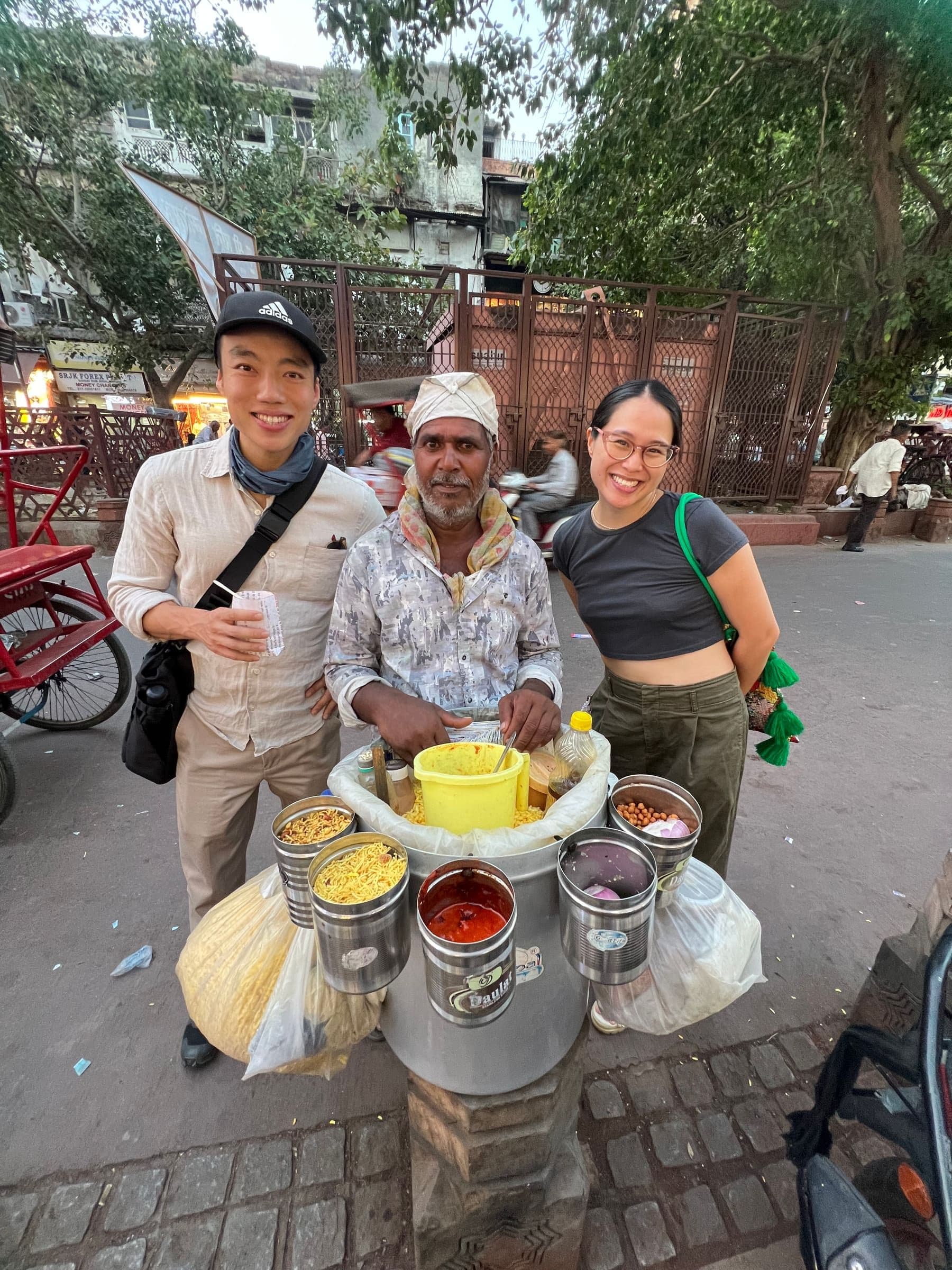
The other 90% is tucked into side lanes that don't have English signage, don't appear on Google's "top rated" lists, and in some cases don't have signage at all — just a cart, a name everyone in the neighbourhood already knows, and a queue of locals on their lunch break. These hidden food gems in Old Delhi matter for a simple reason: they're where the food culture is still being lived, not performed. Nobody is cooking for a camera. They're cooking because a customer who's been coming for fifteen years just walked in and ordered "the usual."
So how do locals actually find these places? Almost never by searching. It's word of mouth passed between neighbours, a shopkeeper pointing a friend two lanes over, a rickshaw driver who knows exactly where he'd eat on his own break. It's the kind of knowledge that accumulates from walking the same 500 metres of Old Delhi every single day for years, not from a weekend visit. That's also exactly why Old Delhi's side lanes consistently out-deliver the famous Instagram spots: a shop that survives purely on local repeat business has no reason to cut corners, inflate prices for out-of-towners, or simplify a recipe to be more "approachable." It just has to be good enough that the same aunty keeps coming back on a Tuesday.
This guide is our attempt to hand that same word-of-mouth knowledge to you directly — five specific hidden food gems in Old Delhi, most of them within walking distance of Chandni Chowk's famous main road, none of them requiring an insider connection to visit once you know where to look.
How We Found These Hidden Food Gems
We're Old Delhi Food Tours, and we've been guiding visitors through these exact lanes for more than ten years. In that time we've hosted several thousand guests on foot through Chandni Chowk, Chawri Bazar, and the narrower gullies that branch off the main food streets — which means we've also spent ten years eating our way through every shop those guests point at and ask, "what's that one?"
None of the five spots below came from a listicle. They came from relationships built over years with shop owners who now recognise us by face, from being told about a cousin's stall two lanes over, and from the simple habit of walking Old Delhi almost every day rather than visiting occasionally. A guide who only comes through once a month sees the market as a tourist does. Walking it daily, for a decade, means watching which queues are made of regulars rather than sightseers, which shop owners quietly stopped bothering to put up an English sign because they never needed one, and which stalls only exist because a family has kept the same recipe going since a grandparent started it.
That's the standard we held every entry on this list to: it has to be a place we'd genuinely bring a guest, not just a place that photographs well.
What Makes a Food Spot a Hidden Gem?
Not every unmarked stall is a hidden gem — plenty of unmarked stalls are unmarked because they're mediocre. Over the years we've settled on a few honest markers that separate a genuine hidden gem from a place that's simply hard to find:
- Local-heavy customer base — the queue is mostly Old Delhi residents on a work break, not visitors with cameras out.
- Single-dish mastery — the shop makes one or two things extremely well rather than a long menu made adequately, a pattern true of nearly every great Old Delhi food stall.
- Generational continuity — the recipe and the counter have been passed down inside one family, often for 40, 60, or over 100 years.
- No paid promotion — these shops rarely appear in sponsored "best of Delhi" roundups, because word of mouth has always been enough for them.
- Fair, stable pricing — locals-first shops tend to charge the same price to everyone, rather than quietly raising rates for visibly non-local customers.
- Minimal or no English signage — a genuine sign that a shop has never needed to market itself to outsiders to survive.
A useful rule of thumb: if a shop is comfortably busy at 1pm on a Tuesday with almost no tourists in sight, it's very likely one of Old Delhi's real hidden gems.
5 Hidden Food Gems in Old Delhi
These five are ordered roughly the way you'd encounter them on a walk from Chawri Bazar toward Fatehpuri — not by rank. Each one has earned its place through years of us watching locals, not tourists, form the queue.
 1
1Prakash Chaat Bhandar — Kucha Ghasi Ram
A tiny chaat counter tucked into Kucha Ghasi Ram, a narrow lane near Fatehpuri Masjid, best known among Old Delhi regulars for palak patta chaat (crisp fried spinach leaves layered with yogurt and chutneys) and a version of aloo tikki that's darker and crunchier than the versions served on the main tourist stretch. There's no seating beyond a couple of benches, and the counter is easy to walk straight past if you don't already know it's there.
- Taste Profile
- Sharply tangy and layered — the fried spinach leaf gives a crunch that regular aloo tikki chaat doesn't have, against cool yogurt and two or three chutneys stacked rather than drizzled.
- History
- Run by the same family for multiple generations, quietly serving the same Kucha Ghasi Ram neighbourhood long before chaat became a citywide food-tourism draw.
Insider tip: Ask for palak patta chaat specifically — it doesn't always make it onto a hand-written menu, but it's what regulars order by name.
Why tourists love it: It's the rare chaat stall where the neighbourhood itself is the marketing — no signage in English, no social media presence, just a lane that's known this counter for decades.
Must order: palak patta chaat. Nearby: Fatehpuri Masjid is a two-minute walk, and Khari Baoli, Asia's largest spice market, begins right at the mosque's western edge — worth a slow walk through for the smell alone.
 2
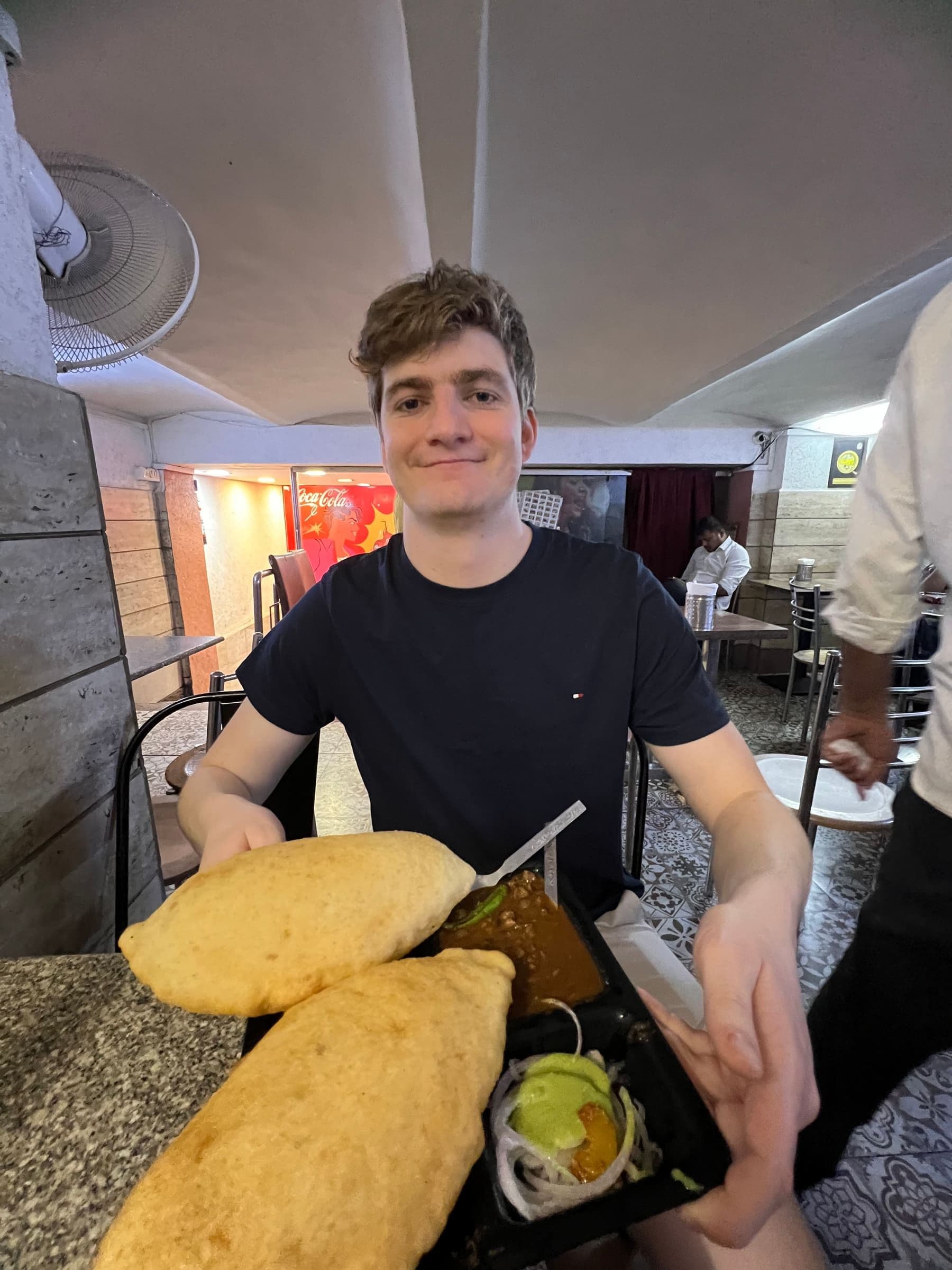
2Chainaram Sindhi Halwai — Near Chandni Chowk Metro
A Sindhi halwai (sweet and snack shop) operating since the early 1900s, brought to Delhi by a Sindhi family after arriving from what's now Pakistan. Chainaram specializes in chole bhature and a dense, ghee-rich suji halwa served together in one plate — a combination that's very much a local breakfast habit and far less commonly recommended to visitors than the chole bhature stalls on the main Chandni Chowk road.
- Taste Profile
- The chole here lean tangier and less oily than the more famous versions nearby, and the halwa is dense, warm, and generously ghee-soaked — a rich, comforting pairing rather than two separate dishes.
- History
- Founded in the early 20th century by a Sindhi refugee family, Chainaram has operated from roughly the same spot for well over a hundred years, adjusting little beyond the occasional renovation.
Insider tip: Order the chole-bhature-halwa combination rather than picking one — that's how locals actually eat it here, and it's a more balanced meal than either dish alone.
Why tourists love it: It's a genuine slice of Sindhi Delhi history hiding a few steps from the most photographed street in the city, and most tourists walk right past it toward the more famous names.
Must order: chole bhature with suji halwa on the side. Nearby: the main Chandni Chowk road and Town Hall are a two-minute walk, making this an easy first or last stop on a longer food walk.
 3
3Jung Bahadur Kachori Wala
A breakfast-only kachori stall, run from a modest cart near the Chandni Chowk metro exit, serving deep-fried, lentil-stuffed kachoris with a spiced potato curry. It's become slightly better known among serious Delhi food enthusiasts in recent years, but it's still routinely skipped by tourists whose walking tours start later than the shop's morning window.
- Taste Profile
- Crisp, flaky kachori shell with a coarsely spiced urad dal filling, dunked into a tangy, mildly spiced potato curry — heavier and more textured than most Old Delhi breakfast items.
- History
- A family-run breakfast cart that's operated in roughly the same spot for decades, building its reputation purely through commuters and neighbourhood regulars rather than tourism.
Insider tip: Arrive before 10am. This is the single most common reason visitors miss it — they simply arrive too late in the day.
Why tourists love it: It's proof that some of Old Delhi's best food only exists in a narrow morning window, which automatically filters out anyone not willing to start their day early.
Must order: kachori with aloo sabzi, eaten standing at the cart the way regulars do. Nearby: Chandni Chowk main road and Paranthe Wali Gali are both a five-minute walk, making this a natural first stop before a longer breakfast crawl.
 4
4Bille Di Hatti — Old Delhi Lassi and Daulat Ki Chaat
A small, long-running dairy counter known among Old Delhi locals for thick, malai-topped lassi year-round and, in winter, one of the more consistent versions of daulat ki chaat — the frothy, saffron-dusted milk dessert that most tourists never encounter simply because it's only made for a few winter months.
- Taste Profile
- The lassi is dense and only lightly sweetened, topped with a generous layer of malai (clotted cream); the winter daulat ki chaat is airy, barely sweet, and closer to flavoured foam than to any dessert most first-time visitors have tasted.
- History
- A family-run dairy shop with roots going back multiple generations, known locally less for a headline dish than for reliably good quality across everything it makes.
Insider tip: If you're visiting outside winter, don't bother asking for daulat ki chaat — no amount of persuading will produce it out of season. Come back for the lassi instead.
Why tourists love it: It's a shop locals trust for consistency rather than spectacle — the kind of place that doesn't need a queue around the block to prove it's good.
Must order: malai lassi in a clay kulhad; daulat ki chaat if visiting between November and February. Nearby: Town Hall and the main Chandni Chowk food strip are a short walk away.
 5
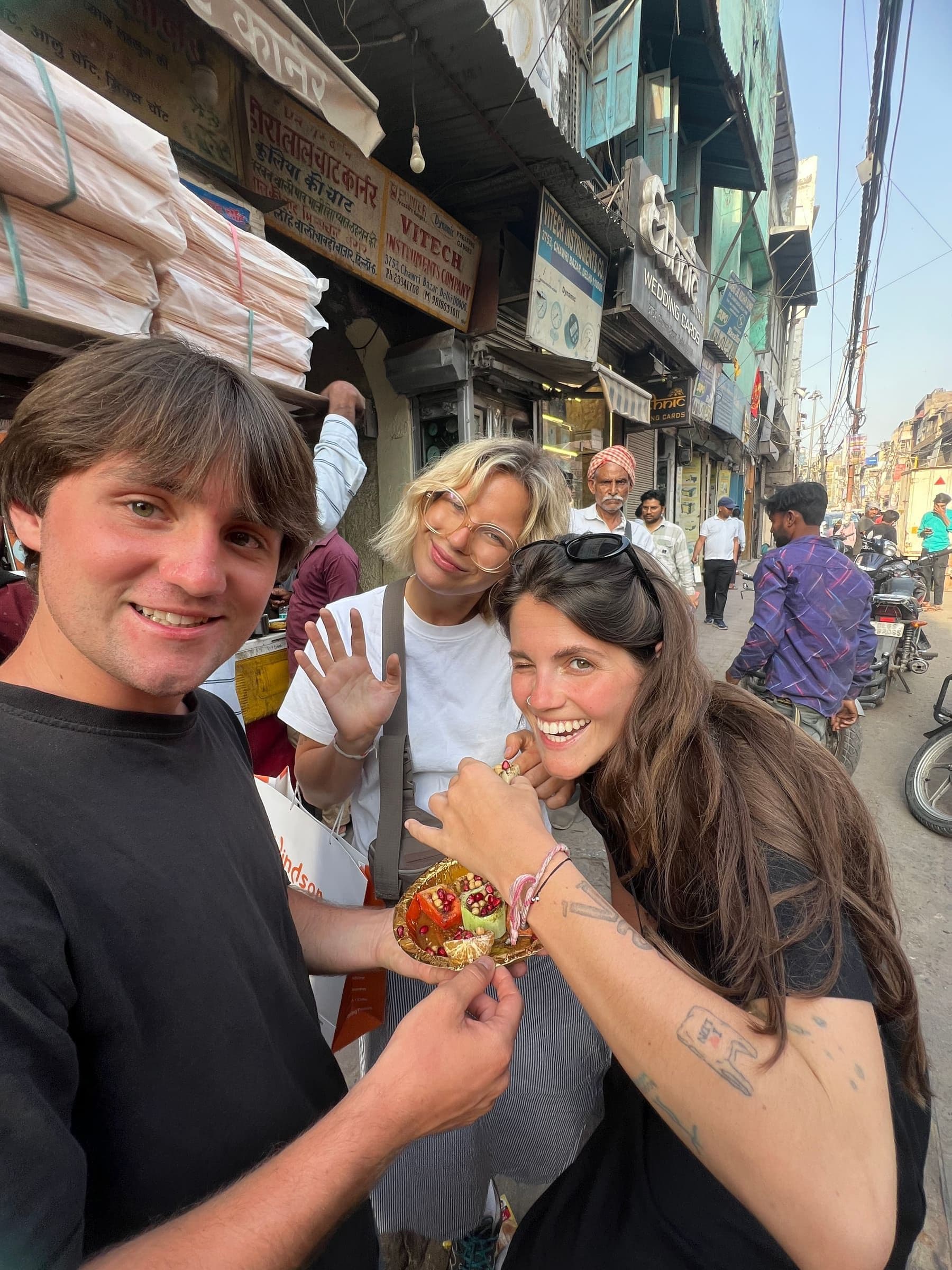
5Meetha Paan Corner — Near Chawri Bazar
Not a meal, but arguably Old Delhi's most overlooked food tradition: a family-run paan (betel leaf) counter near Chawri Bazar where a betel leaf is folded around a mix of sweet fillings — grated coconut, gulkand (rose petal preserve), fennel, and a scatter of edible silver leaf — and handed over as a single bite meant to be eaten whole, right after a meal.
- Taste Profile
- Sweet, floral, and cooling from the rose and fennel, with a pleasant herbal bitterness from the betel leaf underneath — an entirely different flavour category from anything else on this list.
- History
- Paan-making is one of Old Delhi's oldest food traditions, predating most of the market's famous sweet and snack shops, and family paan counters like this one have quietly served the same neighbourhood for generations without ever needing to advertise beyond word of mouth.
Insider tip: Ask for meetha (sweet) paan specifically if you're new to it — the sweet version is a gentler introduction than the tobacco-based paan more commonly associated with the tradition.
Why tourists love it: It's the one entry on this list most visitors would never think to seek out on their own, and it's exactly the kind of small, ritual food experience that a decade of guiding has taught us guests remember longest.
Must order: meetha paan with gulkand and coconut filling. Nearby: this is a natural closing stop right at Chawri Bazar Metro Station, Gate No. 3, making it the perfect end point for a self-guided walk.
Best Time to Visit
Timing matters more for hidden gems than for the famous stalls, because most of these shops run on a local rhythm rather than a tourist one. Kachori carts like Jung Bahadur wind down by mid-morning. Winter-only dishes like daulat ki chaat vanish completely between March and October. And the chaat and paan counters hit their best flow in the late afternoon and evening, when Old Delhi residents themselves are stopping for a snack on the way home.
| Spot | Best window | Why |
|---|---|---|
| Prakash Chaat Bhandar | 4pm–6pm | Local after-work snack rush, freshest chutneys and batches |
| Chainaram Sindhi Halwai | Before 10am | Halwa is best fresh off the kadhai in the morning |
| Jung Bahadur Kachori Wala | 7am–10am | Breakfast-only; sells out or slows by mid-morning |
| Bille Di Hatti | Midday (lassi); early morning, Nov–Feb (daulat ki chaat) | Daulat ki chaat deflates within hours and is winter-only |
| Meetha Paan Corner | Evening, after dinner | Traditionally an after-meal ritual, not a daytime snack |
October through March is the most comfortable season overall — for more on general Old Delhi weather and planning, see our Old Delhi travel guide.
Map & Route
All five of these hidden food gems sit within a roughly 20-minute walking radius of Chawri Bazar Metro Station, which is also where our own guided Old Delhi Food Tour begins. None of them require a car, a rickshaw, or a fixer — just a bit of patience with narrow lanes and a willingness to ask a shopkeeper for directions if a turn isn't obvious.
Self-Guided Hidden Food Trail
Starting point: Chawri Bazar Metro Station, Gate No. 3. This route roughly follows the order the five gems appear above, sequenced to avoid backtracking:
- Exit Chawri Bazar Metro Station, Gate No. 3. (0 min)
- Walk toward Fatehpuri Masjid and Kucha Ghasi Ram for palak patta chaat at Prakash Chaat Bhandar — roughly 12–15 minutes' walk.
- From Kucha Ghasi Ram, walk back toward the Chandni Chowk main road and on to Chainaram Sindhi Halwai near Chandni Chowk Metro Station — roughly 15 minutes.
- From Chainaram, it's a short 5-minute walk to Jung Bahadur Kachori Wala near the same metro exit (best done first if you're starting early for breakfast — see the reordering note below).
- Walk toward Town Hall for lassi or daulat ki chaat at Bille Di Hatti — roughly 5–8 minutes.
- Finish by walking back toward Chawri Bazar Metro Station, Gate No. 3, for meetha paan at the Meetha Paan Corner — roughly 10 minutes.
Total distance: roughly 3–3.5km round trip. Total time: 3–4 hours at an unhurried pace. Because Jung Bahadur Kachori Wala only makes sense before mid-morning, consider starting there first and looping the rest of the route afterward, finishing with the evening-only paan stop as a separate short outing later in the day.
If you'd like a printable reference, a Google Maps walking route between these five stops is easy to build yourself by dropping each shop's approximate location as a pin — we recommend doing that the night before so you're not searching for signal in narrow lanes with patchy connectivity.
Food Safety Tips
Is Hidden Street Food Safe?
Hidden food gems are not inherently riskier than famous stalls — if anything, a shop that survives purely on repeat local business has every incentive to keep quality and hygiene consistent, since a single bad batch would cost it the regulars it depends on. That said, hidden spots don't come with a queue of visible reviews to reassure you, so it helps to know how locals themselves judge a stall before eating there.
- Freshness indicators — batches that are visibly small and turning over quickly (a kachori cart frying in small rounds, a chaat counter mixing to order) are a good sign; a large tray sitting untouched for a while is not.
- Hygiene signs — clean hands and utensils, ingredients stored covered, and a cook who changes gloves or rinses hands between tasks are all worth watching for before you order.
- Crowd composition — a counter with a steady stream of neighbourhood regulars, especially at odd hours like 4pm on a weekday, is one of the strongest positive signals in Old Delhi's food scene.
- What tourists should avoid — pre-cut fruit or chaat toppings that have been sitting exposed for a long time, tap water or ice of unknown origin, and any stall that seems to be pricing you differently than the locals ahead of you in line.
- When in doubt, ask — most vendors are used to being asked "is this fresh?" or "just made?" and a confident, specific answer (rather than a vague one) is itself a good sign.
For a broader rundown of general Old Delhi safety, including tips for solo travellers, see our Old Delhi travel guide's safety section.
Want to Experience These Hidden Gems With a Local?
Everything above is genuinely walkable on your own — that's the whole point of publishing it. But if you'd rather skip the trial and error, our small-group Old Delhi Food Tour takes guests through hidden food gems just like these, sequenced and timed the way ten years of daily walking has taught us works best.
- Small groups, led by a local guide who's walked these exact lanes for over a decade.
- Access to hidden food spots that don't show up on any map or listing.
- Real-time hygiene judgment, so you can eat confidently without wondering which stall to skip that day.
- A route built to skip Old Delhi's tourist traps entirely, not just avoid them by luck.
- No backtracking and no wasted time hunting for an unmarked lane on your phone.
Ready to taste Old Delhi the way locals actually eat it? Book the Old Delhi Food Tour.
Final Thoughts
The famous stalls of Chandni Chowk earned their fame honestly, and we still recommend visiting them — our own Chandni Chowk food guide covers the essential 15. But the five hidden food gems above are where Old Delhi's food culture is still being lived rather than performed for a camera. Give yourself the extra 20 minutes it takes to walk a side lane, ask a shopkeeper what they'd order for themselves, and don't be surprised if the best meal of your trip turns out to be the one with no sign above the door.